Manual vs automatic cars – if you’re a South African driver, here’s what you need to know. Choosing between a manual car and an automatic is one of the most common questions we hear at Raceview Motors. It is worth getting right before you sign anything.
The answer depends on where you drive, how you drive, and what matters most to you day to day.
Understanding Car Transmission Types
Before weighing up the pros and cons of manual vs automatic, it helps to understand what you are actually choosing between.
Car transmission types have multiplied over the past decade. What used to be a straightforward two-option choice has become a little more layered.
What Is a Manual Transmission?
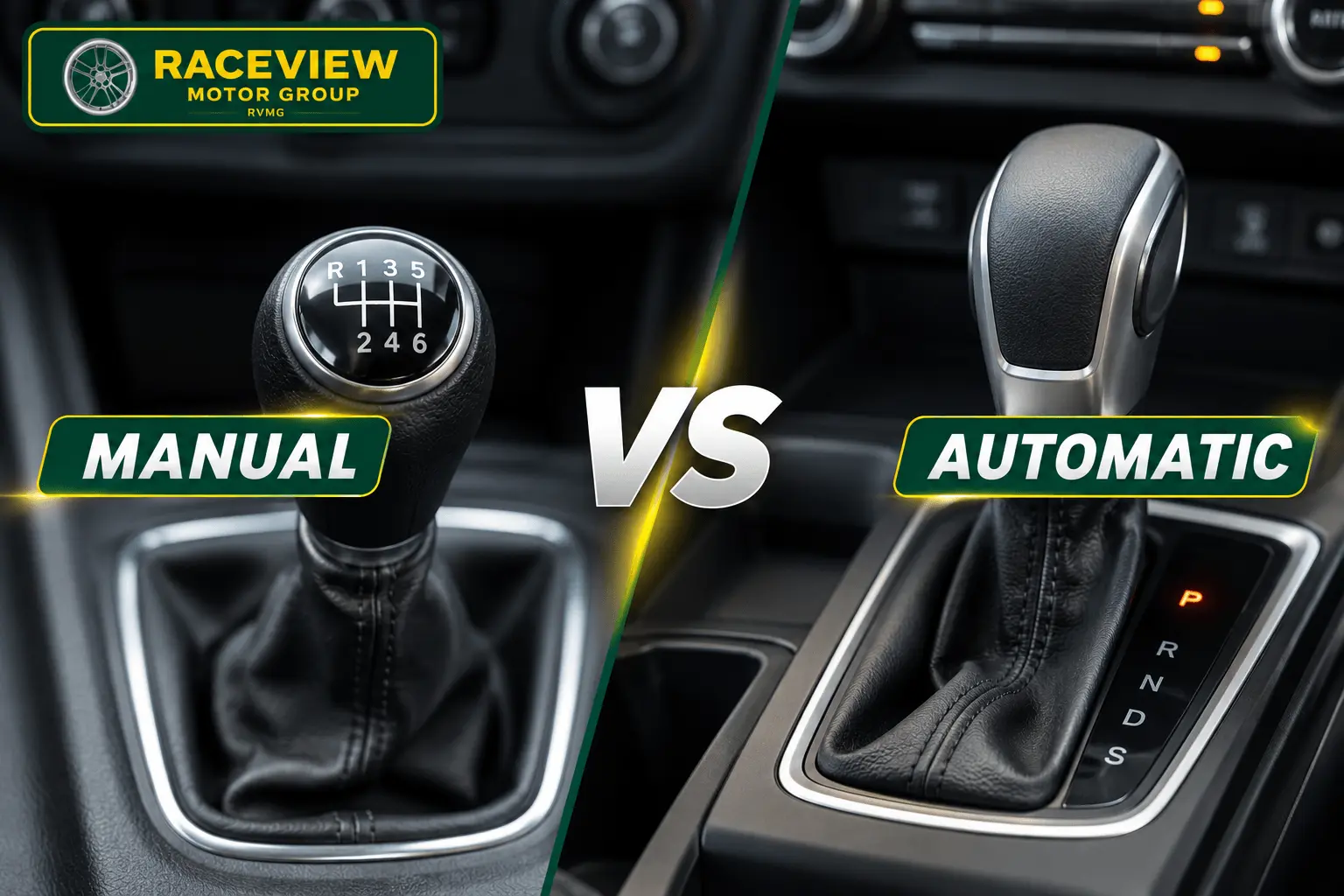
A manual transmission, also called a manual gearbox or stick shift, requires the driver to select gears using a clutch pedal and gear lever.
You control when the engine changes power delivery. This gives you a direct connection to how the car behaves.
Most manual cars have five or six forward gears. The driver is responsible for matching the gear to the speed and driving condition at all times.
What Is an Automatic Transmission?
An automatic transmission handles gear changes on your behalf. The car reads your speed, throttle input, and engine load, then selects the appropriate gear.
You simply select Drive and focus on steering, braking, and accelerating. Automatic transmission gears vary across models, so it’s best to speak to your car salesman to see what your options are.
Manual vs Automatic: How Transmission Works
The difference between automatic and manual car setups goes deeper than just the pedals.
Understanding car transmission meaning and the differences between types makes it much easier to choose the right vehicle for your lifestyle.
The Advantages of Manual Cars
Manual cars still make sense for many South African drivers, particularly those with specific preferences or tighter budgets.
Lower Purchase Prices
A manual version of the same model almost always costs less than its automatic counterpart. When you are shopping for a quality pre-owned vehicle and every rand counts, that price gap matters.
Across our pre-owned vehicle stock, manual options tend to carry a lower asking price for comparable models.
Greater Driver Control
Many drivers genuinely enjoy the engagement of a manual gearbox. You decide when the car changes gear.
This is useful for overtaking, descending steep hills, or driving on wet or gravel surfaces where precise control matters.
For drivers who spend time on rural roads, this level of control can feel reassuring rather than extra effort.
Potentially Lower Maintenance Costs
A manual transmission has fewer electronic components than an automatic. This can translate into lower repair bills when something goes wrong.
The main wear item on a manual car is the clutch. It needs replacing periodically depending on driving style and mileage.
A clutch replacement is a known, manageable cost compared to some of the more complex repairs that can arise with automatic systems.
Better Performance for Certain Driving Styles
For drivers who enjoy a more spirited approach, a manual gearbox puts gear selection in their hands. Some performance-oriented models are still offered exclusively with manual transmissions, particularly in the budget sports car segment.
If you value a direct connection between driver and machine, manual remains a compelling choice.
Do you want to know more about owning a pre-loved manual car?
The Disadvantages of Manual Cars
More Challenging for New Drivers
Learning to drive a manual car takes time. Coordinating the clutch, gear lever, and accelerator simultaneously is a skill that takes practice. It can feel overwhelming at first, especially on hills or in heavy traffic.
Less Convenient in Heavy Traffic
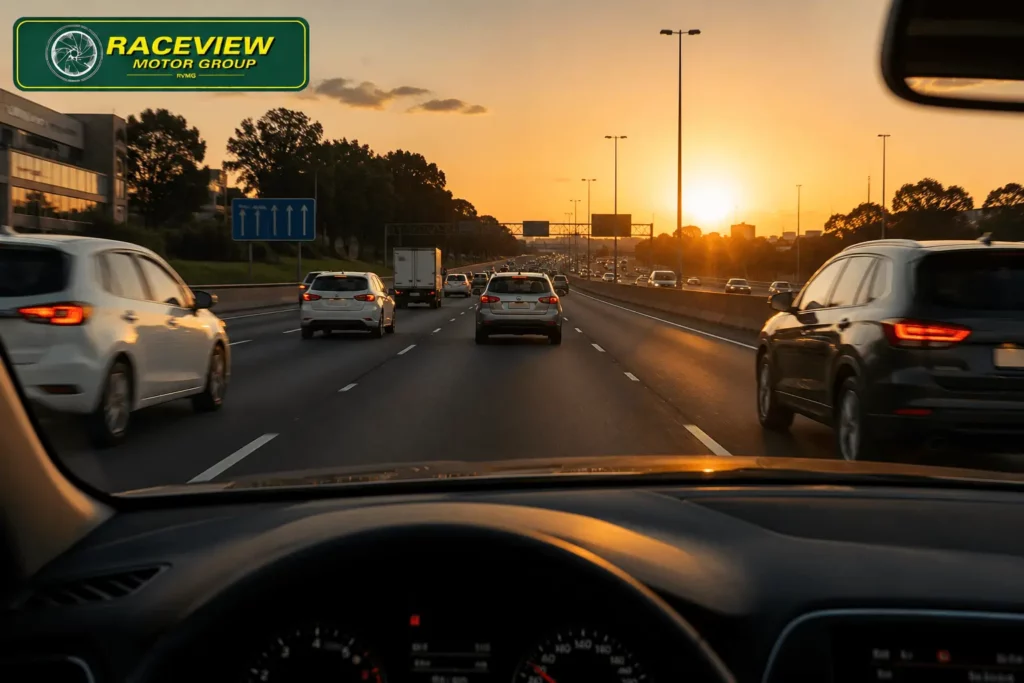
Stop-start traffic on South African roads, particularly in Gauteng, is genuinely tiring in a manual car. Every traffic light and every jam requires clutch and gear work. That effort adds up over a long commute.
Drivers who do most of their mileage in urban traffic often find manual cars a bit too demanding for every day use.
Resale Demand May Be Lower
The market for manual cars in South Africa has been gradually narrowing. As automatic and AMT options become more common and more affordable, fewer buyers are actively looking for a manual car.
This can affect resale value when you eventually upgrade. Particularly on higher-spec models where buyers tend to expect automatic transmission as standard.
The Advantages of Automatic Cars
Automatic vehicles now make up the majority of new cars sold in South Africa. The reasons are practical rather than simply a matter of preference.
Easier and More Comfortable to Drive
With only two pedals and no clutch to manage, an automatic car is more accessible to a wider range of drivers. It reduces fatigue on long commutes, makes parking in tight spaces easier, and removes the risk of stalling in awkward situations.
For drivers recovering from injury or managing physical limitations, an automatic gear car tends to be the more sensible choice.
Better for Urban and Stop-Start Traffic
This is where automatic transmission genuinely earns its place in South Africa. Crawling through Johannesburg traffic in an automatic is considerably less taxing than doing the same in a manual.
The car handles gear selection while you focus on the road ahead. Also, this makes it safer driving in high-density conditions.
Popular Among South African Buyers
Over the past several years, we have seen a clear shift in what buyers are asking for. Automatic cars now outsell manual cars by a significant margin on our floor, and the trend continues to move in one direction.
This growing demand also supports better resale values for automatic vehicles over time.
Improved Fuel Efficiency in Modern Models
Older automatics had a reputation for being heavier on fuel than their manual counterparts. Modern automatic transmission technology has changed this significantly.
Many of today’s automatic vehicles match or outperform equivalent manual cars on fuel consumption. Particularly on highways where the gearbox can optimise gear selection more precisely than a driver typically would.
Want to know more about fuel efficency and pre-loved automatic cars?
The Disadvantages of Automatic Cars
Higher Purchase Prices
Automatic vehicles generally carry a higher price tag than the equivalent manual model. For budget-conscious buyers, this is a real consideration.
That said, the gap is narrowing as automatic technology becomes more mainstream. The used car market increasingly helps automatic cars and their affordability.
Potentially More Expensive Repairs
When an automatic transmission develops a fault, repair costs can be higher than a manual gearbox repair.
The complexity of hydraulic systems, solenoids, and electronic controls means specialist work is often required.
Keeping up with manufacturer-recommended service intervals is particularly important for automatic vehicles to avoid costly repairs down the line.
Less Driver Engagement
If you enjoy the feeling of driving rather than simply being transported, a fully automatic vehicle can feel a little passive.
Some drivers describe it as losing something in the experience, though most adapt quickly and appreciate the comfort it provides.
Which Option Is Better for South African Roads?
South Africa’s road conditions are genuinely varied. When looking at a manual vs automatic car, the right transmission choice often depends on where you spend most of your time.
City Driving
For Johannesburg, Pretoria, and other urban centres, automatic wins without much debate.
The constant stop-start conditions are far easier to manage, and reduced fatigue contributes to safer driving on busy roads.
Long-Distance Travel
On open highways and long trips between provinces, the difference narrows considerably. Both transmission types perform well at steady speeds.
Many drivers find the automatic more relaxing on extended journeys. A well-sorted automatic allows you to set cruise control and focus entirely on the road ahead.
Gravel Roads and Rural Areas
Here the manual car makes a stronger case. The ability to select a specific gear and hold it while navigating a rough gravel road gives the driver more control. Engine braking on descents is also more intuitive in a manual.
If you regularly travel on farm roads or unpaved surfaces, a manual or a well-specced AMT transmission in a bakkie may suit your needs better.
Daily Commuting
For most working adults commuting in Gauteng, the automatic comes out ahead. Reducing physical effort during daily driving is a real quality-of-life benefit that adds up over weeks and months of commuting.
Ready to Find the Right Car for the Way You Drive?
Whether you prefer the control of a manual car or the convenience of an automatic, the best choice is the one that fits your actual life. The answer to who wins the manual vs automatic battle really depends on you. Your daily routine and budgets are all part of the equation, and there is no single right answer for every driver.
At Raceview Motors, we have been helping Gauteng drivers find the right pre-owned vehicle for over 25 years. We approach every conversation the same way, whether you are spending R80,000 or R800,000.